United Kingdom · guide · 14 September 2026
Which planning conditions need a discharge application: a reading checklist
Applicants often ask which conditions need to be discharged before they can start, occupy, or finish. The expensive mix-up is treating every numbered line as a discharge form — or skipping a reserved-details condition because it sounded like a note. This guide is reading literacy: how to spot discharge application planning condition wording on the sealed notice, and what DecisionBrief does with it.
The short answer for readers
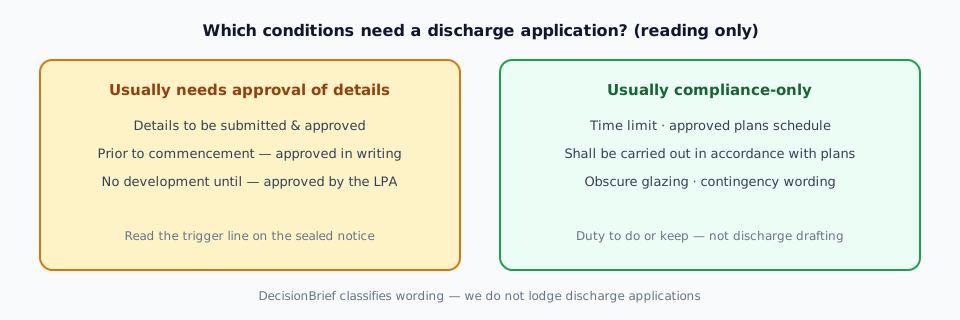
No — not every numbered condition needs a discharge application. On UK planning decision notices, a formal application for approval of details reserved by condition (often called a discharge) is typically for conditions whose wording requires details to be submitted and approved in writing before you proceed past the trigger point. Compliance-only conditions — time limits, approved plans schedules, obscure glazing — usually describe a duty to do or keep something, not a separate submission step on the face of the condition.
GOV.UK explains that requests for approval of further details required by conditions must be made to the local planning authority in writing, with the relevant details enclosed, and that authorities charge a fee for written confirmation that conditions have been discharged or satisfied (use of planning conditions, paragraphs 032–033). The Planning Portal hosts the national form route. That process exists — but it does not mean every line on your notice needs a form.
Discharge application planning condition wording to look for
When you read which conditions need to be discharged, start with the trigger phrase on each numbered line. Patterns that usually describe a submission-and-approval step include:
- “Details of [X] shall be submitted to and approved in writing by the local planning authority…”
- “No development shall commence until… has been submitted to and approved in writing…”
- “Prior to the commencement of development, no development shall take place until…”
- “No works above foundation level shall take place until… approved in writing…” (often during works timing — see how to read condition timing)
- “Prior to occupation / coming into use… details shall be submitted and approved…” (pre-occupation wording — may still need a written approval step)
The checklist is on the wording, not the topic. A CEMP, LEMP, WSI, materials palette, or waste strategy can each appear as reserved details — or as compliance-only if the notice says something else. Quote the sealed notice; do not assume from the subject heading alone.
Wording that is usually compliance-only (no discharge on the face)
These numbered conditions still bind, but they often do not describe a separate “submit details for approval” step:
- Time limit — “The development hereby permitted shall be begun before…”
- Approved plans — “Carried out in accordance with approved plans/drawings…” See approved plans conditions.
- Ongoing compliance — obscure glazing, use restrictions, contamination contingency wording where no submission step is stated
- Physical pre-occupation duties — “Parking spaces shall be laid out and kept available…” with no “submit and approve” phrase
DecisionBrief labels these compliance-only when the wording supports it. You still have a legal duty to comply — we just do not describe a discharge form on the condition text alone.
| On the sealed notice | Typical reading | What DecisionBrief does |
|---|---|---|
| “Details of landscaping to be submitted and approved in writing prior to commencement…” | Reserved details — discharge route likely | Classify pre-commencement; cite wording |
| “No development until archaeology WSI approved in writing…” | Reserved details — discharge route likely | Classify; cite wording |
| “Development shall commence within three years…” | Compliance-only — time limit | Classify compliance-only |
| “In accordance with approved plans listed…” | Compliance-only — build to listed drawings | Classify; list drawing refs exactly |
| “Prior to occupation, parking shall be laid out…” (no submit/approve) | Pre-occupation physical duty | Classify pre-occupation; cite wording |
| Unnumbered informative about Building Regulations | Not a numbered condition | Do not invent condition 23 — see informatives vs numbered conditions |
Timing labels and discharge — related but not the same
Pre-commencement, during works, and pre-occupation describe when the trigger bites. They do not automatically mean “needs a discharge form”. Many pre-commencement lines do describe submit-and-approve wording; many compliance-only lines are also pre-commencement in effect (you cannot lawfully start after the time limit expires). Read both the timing trigger and whether the condition reserves details.
See pre-commencement vs pre-occupation for the two triggers applicants mix up most often, and how to read condition timing for all four labels.
Statutory biodiversity net gain and other non-standard lines
Schedule 7A of the Town and Country Planning Act 1990 requires a biodiversity gain plan to be approved before commencement for relevant developments. Some authorities number it as a condition; others flag it in an informative. That statutory approval step is separate from ordinary condition discharge wording — but it still blocks lawful commencement until satisfied. DecisionBrief records what the notice published. See biodiversity net gain vs LEMP conditions for how to read ecology wording without conflating plans.
What DecisionBrief does (and does not do)
The £79 sourced PDF lists every numbered condition we can source from the sealed notice, classifies each by trigger timing, and cites the council wording so you can see whether the line describes reserved details or compliance-only duty. We do not write CEMPs, LEMPs, WSIs, biodiversity gain plans, or waste strategies. We do not lodge discharge applications or chase the local planning authority for approval.
£79 one-off · one named notice · PDF in 24 hours
Order a £79 sourced reading See the York sample first
Related guides
- How to read condition timing — four labels with York wording patterns.
- Approved plans conditions — compliance-only drawing schedules.
- Informatives vs numbered conditions — do not discharge a note by mistake.
- Decision notice vs officer report — sealed notice first.
Questions
Which conditions need to be discharged?
On the face of the sealed notice, conditions that require details to be submitted and approved in writing typically need a formal application for approval of details reserved by condition. Compliance-only conditions — time limits, approved plans, obscure glazing — usually describe a duty to do or keep something. DecisionBrief classifies the wording; we do not lodge discharges.
What discharge application planning condition wording should I look for?
Look for “submitted to and approved in writing”, “no development shall commence until… approved”, and similar reserved-details phrases. If the condition only states a time limit or “in accordance with approved plans”, that is usually compliance-only on the wording alone — still binding, but not necessarily a separate discharge form.
Do pre-occupation conditions need a discharge application?
Some do, some do not. Pre-occupation wording may require site works, a written strategy, or both. Read the trigger line. DecisionBrief classifies timing and cites the wording; we do not write or lodge discharge applications.
Will DecisionBrief write discharge applications?
No. We classify conditions and cite council wording. We do not prepare or lodge an application for approval of details reserved by condition.
Is this planning advice?
No. This guide and the £79 PDF are sourced readings of public notices. The council's decision notice remains the legal document. If you need advice, instruct a planning consultant or solicitor.
Sources cited on this page: GOV.UK — Use of planning conditions (paragraphs 032–033); Planning Portal — conditions and obligations; DecisionBrief sample for City of York 25/01211/FUL, 45 Hempland Lane. Last reviewed 14 September 2026. DecisionBrief is not a local planning authority.